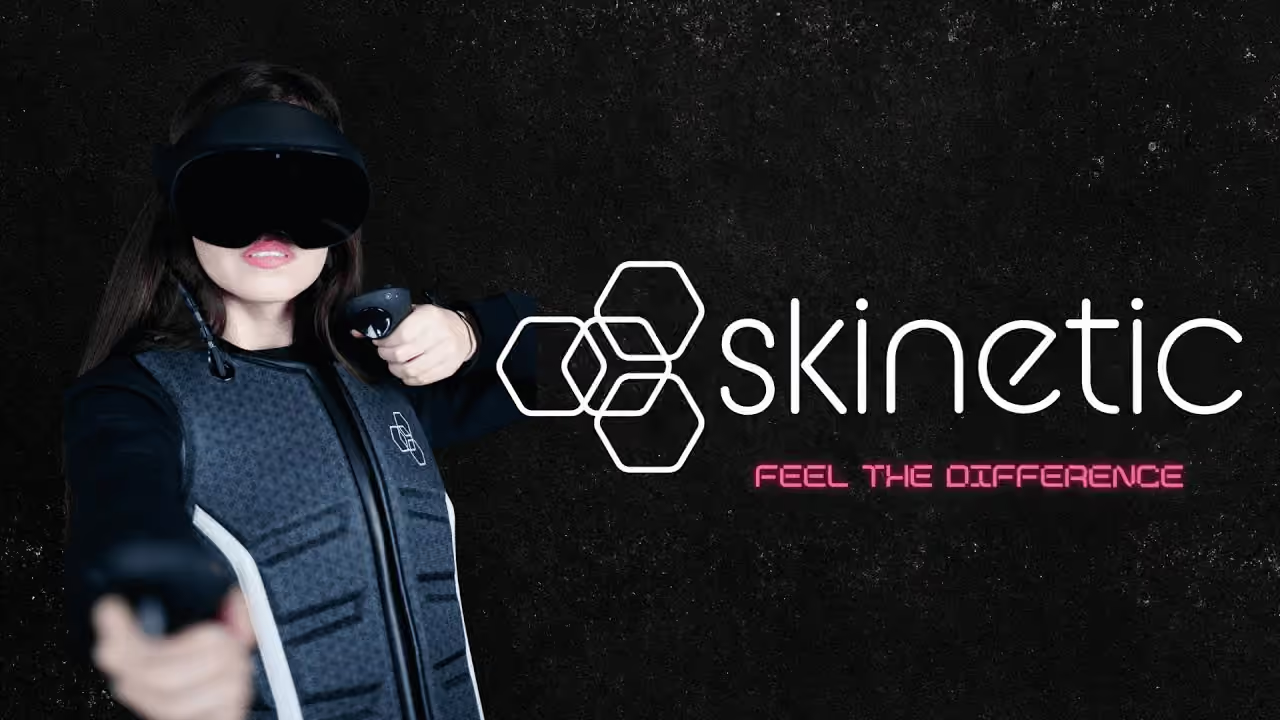
A high-definition haptic vest for virtual reality.
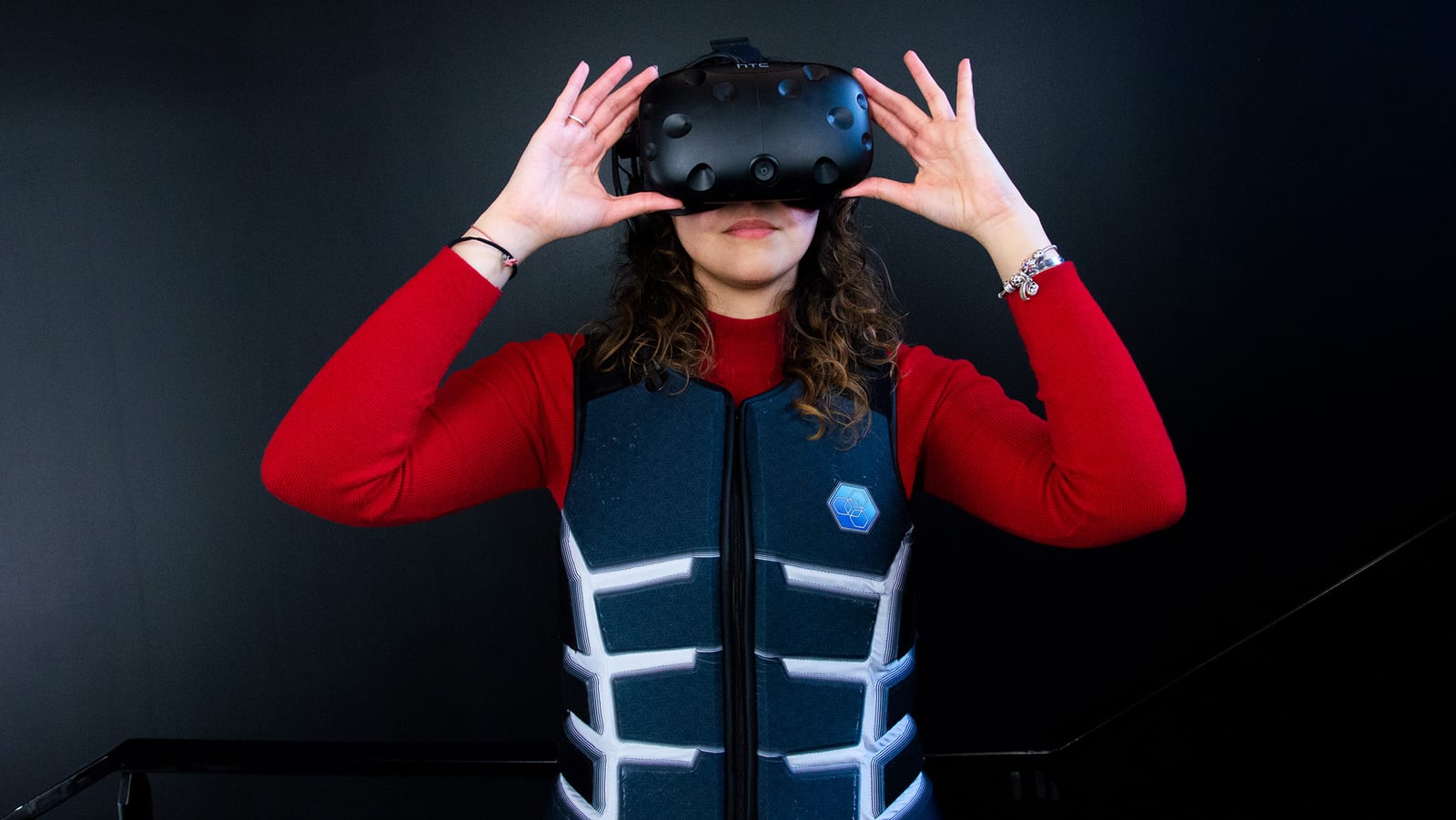
Actronika designed the whole haptic chain, from the actuator to the electronics and software, for other manufacturers' products. Skinetic was its flagship product, a vest built to immerse players in virtual reality through tactile sensations on the body. It was driven by HSD, a multichannel haptic board.
Tactile embodiment
In virtual reality, image and sound place the player in space, but their body receives nothing: a shot, a touch or an explosion remain events that are seen and heard. Tactile feedback, when there is any, comes down to the controller vibrating. Skinetic carried these events onto the torso and back, at the right spot and with the right texture, so the player feels them.
Wideband haptics
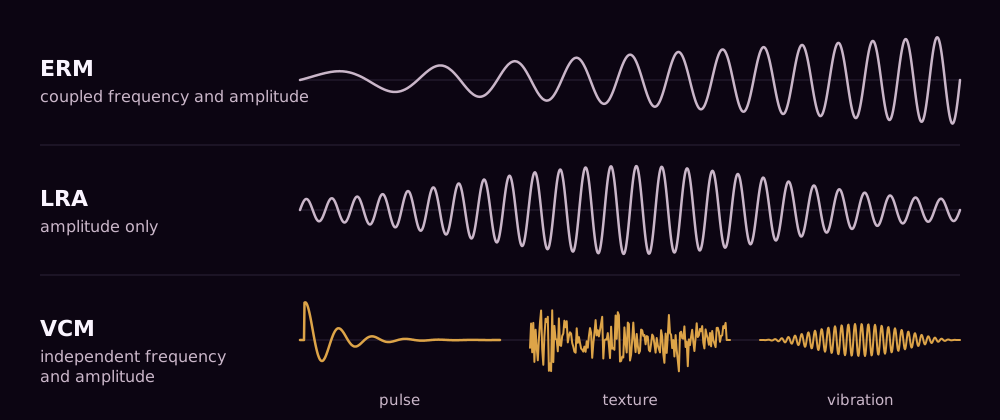
Common vibration motors offer a single setting. An eccentric rotating mass motor (ERM) ties frequency and amplitude to its voltage. A resonant actuator (LRA) only vibrates efficiently around its resonant frequency. Actronika worked with wideband actuators, of the VCM type: frequency and amplitude were set independently from 10 Hz to 1 kHz, like a loudspeaker built for touch. A pulse, a texture or a vibration each had their own signature.
Actuator mapping
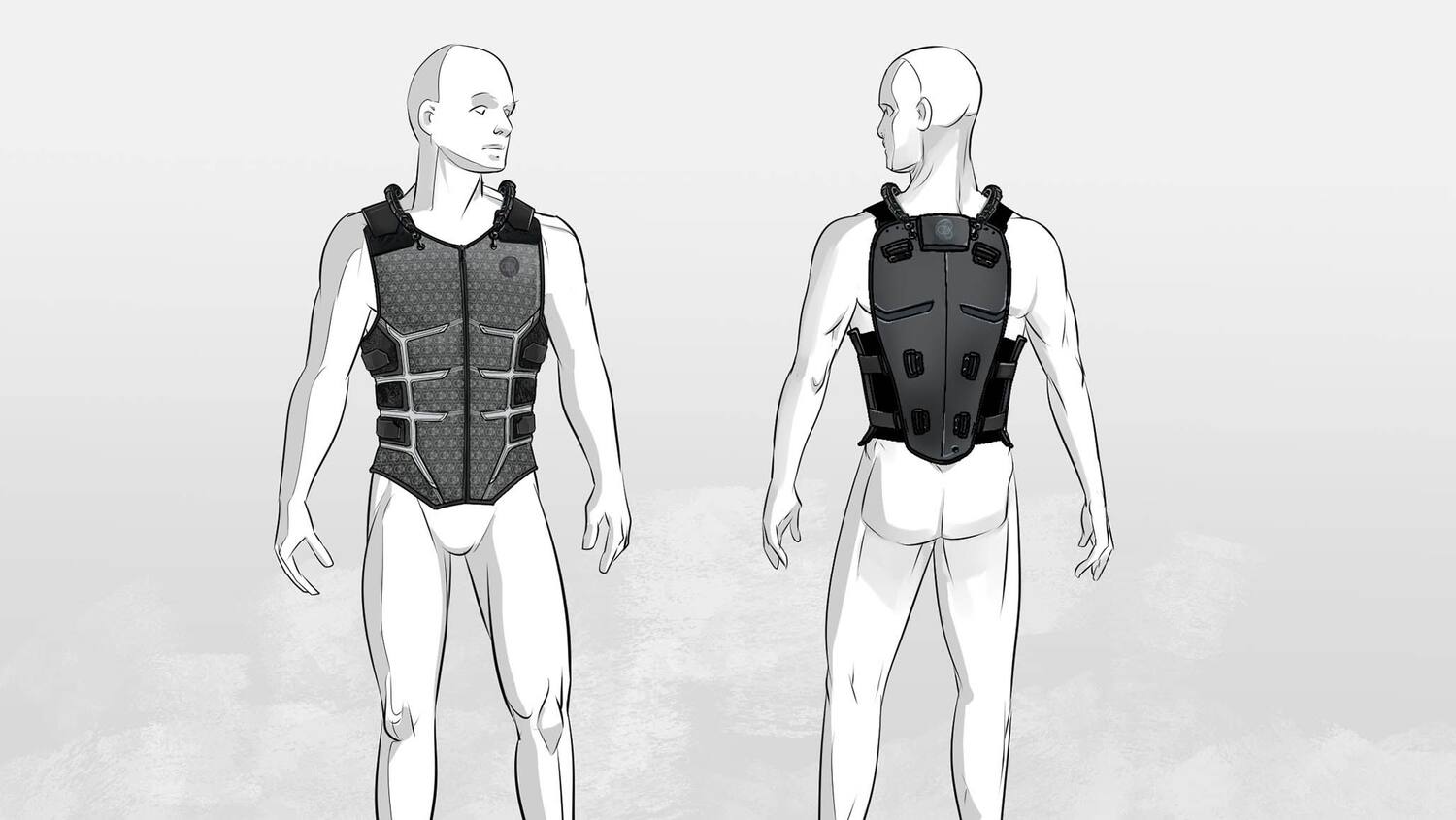
The twenty actuators were spread across the torso, back and sides, following an assessment of tactile sensitivity on the torso. An effect was either played on a single actuator or interpolated across several neighbouring ones to create apparent motion: the sensation was then felt between them and could travel across the body.

Designing for intensive use
The first customers were VR arcades and studios, where the vest changed wearer every session. An operator could not buy one vest per size, so Skinetic was designed to cover XS to XXL. The garment, developed with the Paris workshop Les Vertugadins, held the actuators against the body whatever the build. The mesh lining was quick to swap between uses and easy to wash. The 10-hour battery covered a full operating day.
HSD, a multichannel haptic architecture
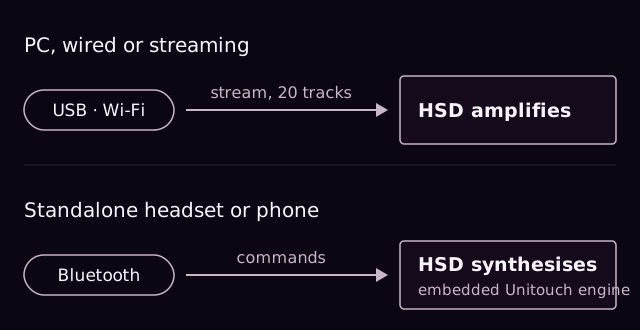
Since the actuator was driven like a loudspeaker, HSD was designed as an audio amplifier. It took a multichannel stream, one track per actuator, and amplified each channel. Over USB, it showed up as a standard audio interface that Unitouch, a DAW or custom code could use with no dedicated driver and no proprietary protocol. It also accepted actuators from other manufacturers, provided their impedance matched. The architecture is patented (FR3127829B1).
The first version was wired, for headsets tethered to a PC. VR hardware then diversified, with standalone headsets and wireless streaming from a PC, while existing setups stayed in use. Skinetic had to work in each of these configurations.
Yet twenty audio tracks exceeded Bluetooth's bandwidth and came close to Wi-Fi's. With a standalone headset, the Bluetooth link therefore carried only commands, and Unitouch's rendering engine, embedded on the board, synthesised the effects locally. When streaming from a PC, the vest joined the headset's Wi-Fi network and received the full stream, as over USB. For developers, nothing changed: the same haptic asset played whether the engine ran in the game or on the board.
The principle behind this architecture took shape in an earlier project on haptic car seats. Offered as a development kit, the board was aimed at professionals and research labs. It was used in experiments on office chairs, cinema seats and even beauty masks.
Equipping studios and players
Every game had to be adapted: one effect per event, composed and then placed on the body. To grow the catalogue of compatible games, four workstreams ran in parallel:
- Unitouch, to compose effects and integrate them into Unity or Unreal, and a development kit sent to VR studios.
- Mods of existing games, such as Beat Saber or Half-Life: Alyx.
- Deals with studios and arcades.
- A compatibility layer, so that effects and integrations built for bHaptics worked on Skinetic.
Industrialising a first run
Around a hundred units were built to validate the manufacturing process with international suppliers (EMS, textile, actuators) and distributed to professionals to produce content.
Adoption ran into two obstacles: arcades, the first market, came out of the pandemic weakened, and the catalogue of compatible games stayed too thin to win over consumers.
Milestones
Skinetic
- Q3 2020: first prototype of the vest.
- Q2 2021: development kit at VR studios, with Unitouch's first spatialisation tools.
- March 2022: pre-orders open.
- 2023: first run of around a hundred units.
HSD
- 2021: Mk1, wired version built around an NXP i.MX RT1050, USB audio interface.
- 2022: Mk2, Bluetooth link and embedded Unitouch rendering engine.
- 2023: Mk3, Wi-Fi link.
Role
Product manager and engineer in a small team: product definition and targets, design of the vest and its single size, choice of HSD's interfaces, support to the CTO on industrialisation. Creation of the brand identity and online sales channels, with Webflow and Stripe. Fundraising and planning.
Recognition
- BPIFrance Innov'Up 2019
- TIME's Best Inventions 2022
- CES Innovation Awards Honoree 2023
- XR Awards 2023, Hardware finalist